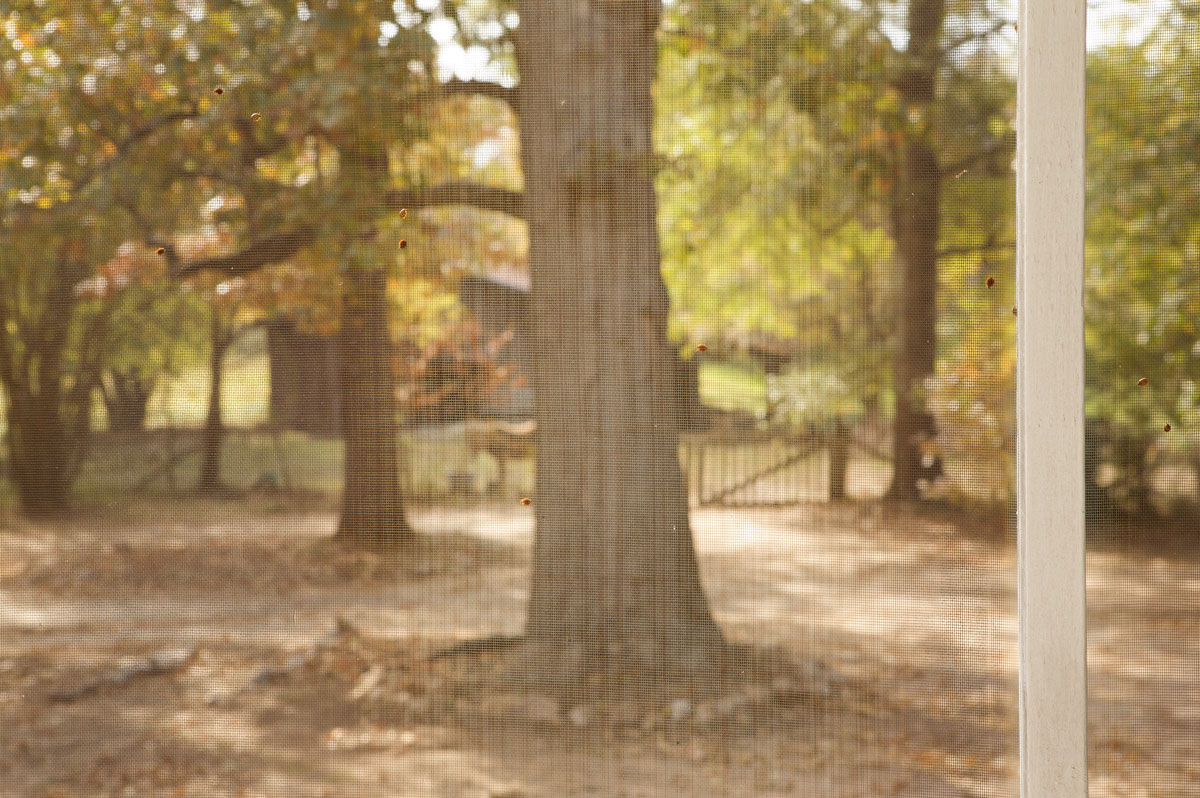
 The front porch at Andalusia. At the outset of a brilliant career, O’Connor came back home for Christmas, only to find she had been stricken with lupus. In her story “The Enduring Chill,” Asbury Fox came home from New York in the grip of a serious illness and wound up sitting miserably on a porch just like this, while being nagged by his mother to “enjoy the view.” — Milledgeville, Georgia
Share With Your Friends
Flannery O’Connor
Andalusia
2628 N Columbia St
Milledgeville, GA 31061
Phone: (478) 454-4029
Website: andalusiafarm.org
Flannery O’Connor Childhood Home
207 East Charlton Street
Savannah, Georgia 31401
Phone: (912) 233-6014
Website: www.flanneryoconnorhome.org
Andalusia
Memory Hill Cemetery
Old Capitol Building
Old Governor’s Mansion
St. Stephen’s Episcopal Church
Grave of the Little Georgia Magnet
Flannery O’Connor Childhood Home

A Journey Through Literary America
$35.00
Description
Explore the fascinating stories of 26 great American authors with images of the places that inspired them to write. It’s the perfect gift for book lovers. With over 140 photographs throughout, the images add mood and dimension to the writing – and they are often shockingly close to what the featured authors described in their own words. Lushly illustrated, and beautifully designed, the book is as much of a pleasure to look at as it is to read.
This is a volume for the literary enthusiast, the armchair traveler or the intrepid reader. It is a handsome and beautifully illustrated companion for those who seek to learn more about authors they have read and those who wish to discover new writers.